


Checkweighing Guide: Why Modern Factories Can No Longer Ignore Precise Weight Control
For modern manufacturers, weight control goes beyond regulatory compliance—it is about actively safeguarding profit margins. A slight excess of just a few grams per package may seem minor, but across a month of high-speed production, this directly translates to a shocking 1% to 5% of your raw material costs lost to "giveaway."
This comprehensive guide explores how modern checkweighing technology can help you eliminate material loss, mitigate regulatory risk, and ensure strict net content compliance. We explore Dynamic Checkweighing in depth, covering everything from system integration and rejector selection to how High Dream enables factories to transition from inconsistent manual processes to fully automated precision control.
What is Checkweighing?
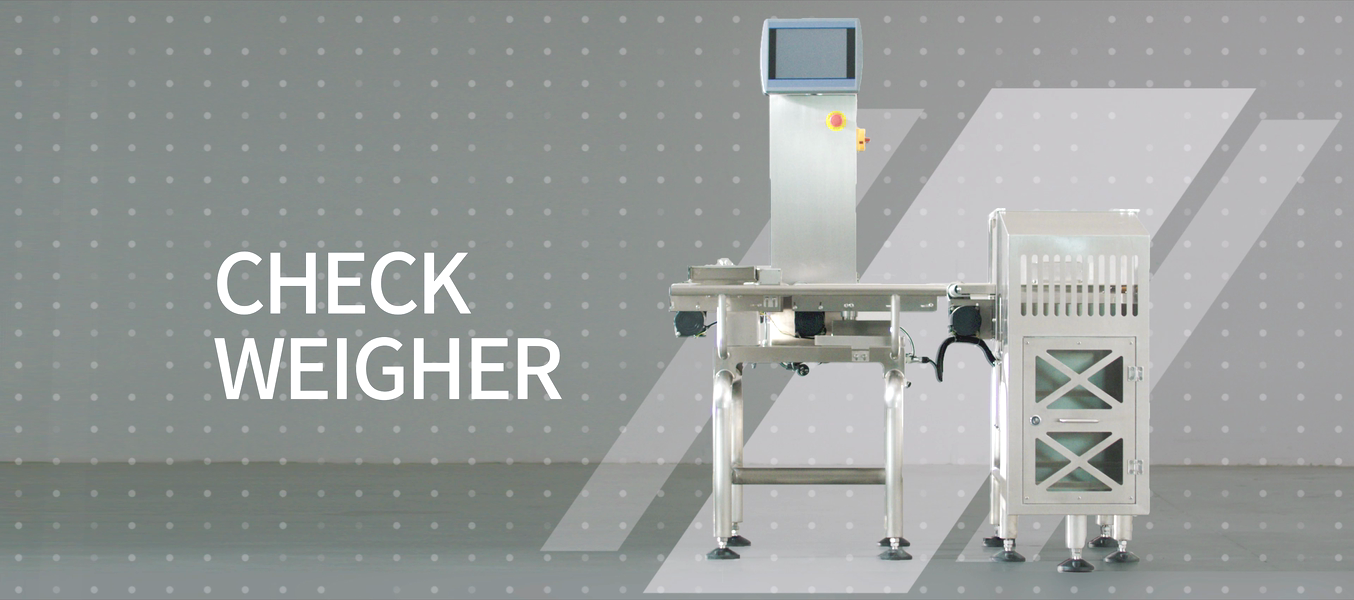
Checkweighing is an automated, high-speed process that continuously weighs every product package on the production line (not just samples). It instantly determines whether the item falls within the pre-set weight tolerance limits.
It matters today because:
- Stricter Net Content Control regulations.
- The immediacy of consumer complaints on social media.
- Rising raw material costs.
- The financial impossibility of unmanaged overfilling (giveaway).
In other words, Weight Accuracy = Quality + Compliance + Profit.
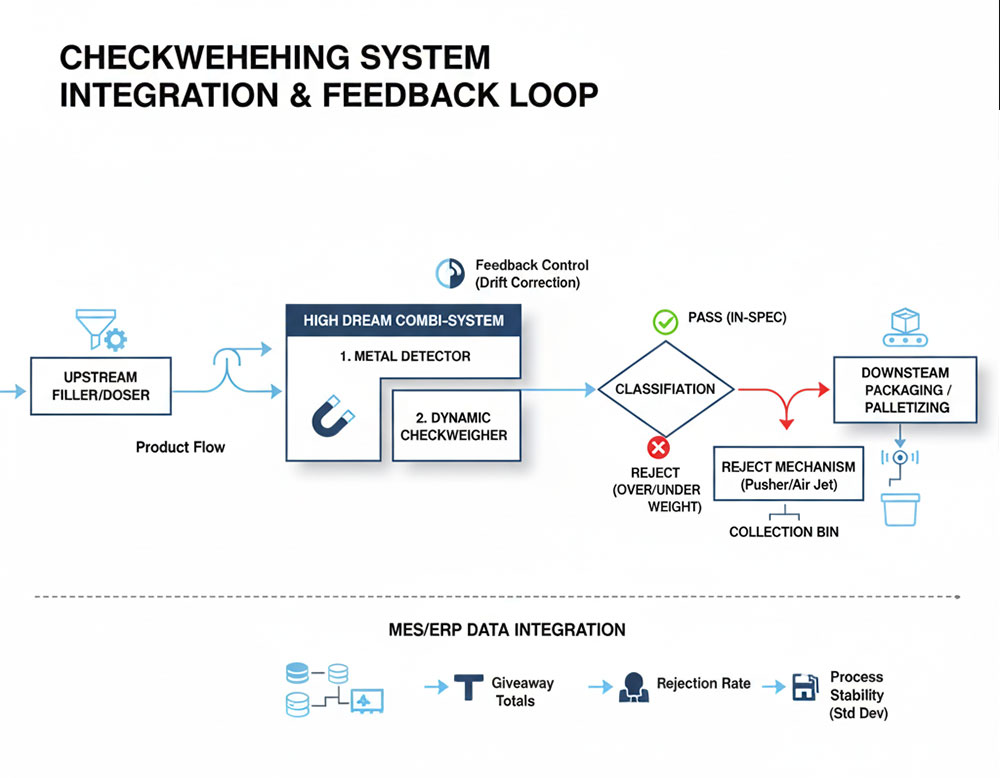
How Checkweighing Works
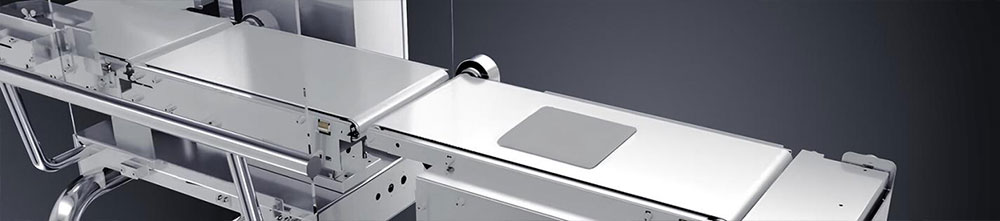
The process is a seamless loop of detection and action:
-
In-feed
: The product enters the checkweigher via the in-feed belt, which actively separates items to ensure that only a single product occupies the weigh cell at any given time. -
Weighing
: As the product traverses the weigh table (which is mounted on a precision load cell), the system instantaneously records its weight. Advanced algorithms then filter out vibrational "noise" to ensure a highly stable measurement. -
Classification
: The system compares the captured weight against the pre-set Target Weight and Tolerance parameters. -
Action (Reject/Pass)
:-
Good Product
: Continues down the line to packing or palletizing. -
Bad Product
: The system sends a signal to a reject mechanism (such as a pusher or air jet), which immediately removes the item from the production flow.
-
Types of Checkweighing Scales
Checkweighers generally fall into two categories:
Dynamic (In-Motion) Checkweighers
These Checkweigher Machines are the standards for industrial automation. They weigh products while they are moving on a conveyor.
- Best for: High-speed production lines (Snacks, Dairy, Chemical).
- Advantage: 100% inspection without stopping the line.


Static Checkweighers
These are manual or semi-automatic scales where an operator places an item on the scale to check it.
- Best for: Spot checks, very heavy items, or low-volume specialty products.
- Disadvantage: Slow, labor-intensive, and prone to human error.
Benefits of Checkweighing: Why ROI is Higher Than You Think
Many manufacturers significantly underestimate the true cost of merely "close enough" weighing. The following are the concrete, data-backed benefits checkweighing provides:
Eliminate Product Giveaway (The Hidden Cost)
In manufacturing, this "overfill" represents an unnecessary loss of pure profit. For high-value raw materials such as meat, candy, or nuts, unmanaged overfill can result in 2% to 5% of a factory's raw material costs being wasted each month. Implementing a checkweigher enables you to tighten tolerances, resulting in a significant reduction in product giveaway.
Avoid Costly Recalls and Complaints
Under-filled products instantly damage brand reputation. Regulations in sensitive sectors like Dairy (milk, cheese) are especially strict in regions like the EU and US (e.g., ±1–2% tolerance). A checkweigher guarantees compliance, thereby preventing costly recalls and regulatory penalties.
Boost Overall Equipment Effectiveness (OEE)
Furthermore, modern checkweighers provide crucial feedback control to upstream fillers: if the product weight begins to drift, the checkweigher automatically signals the filler to make necessary adjustments.
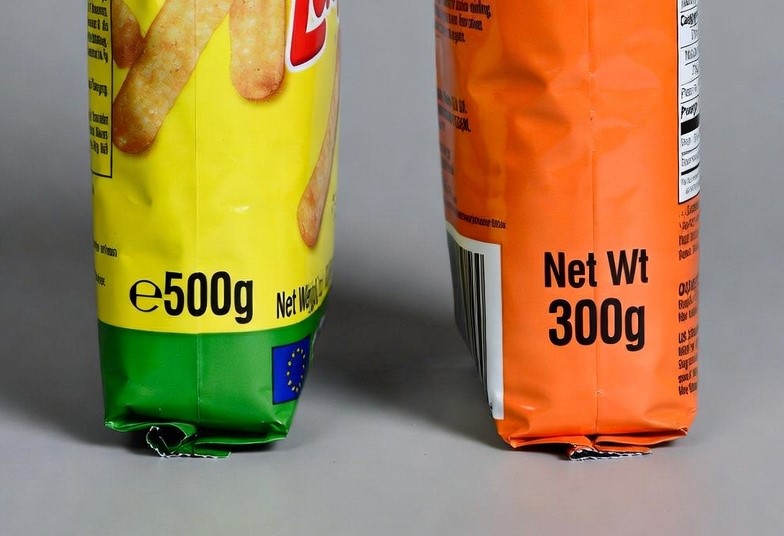
Authoritative Regulation Comparison: EU 'e' Mark vs. US Handbook 133
To ensure regulatory compliance, dynamic weighing systems must adapt to regional legal standards: the EU 'e' mark operates on an average weight system that permits small, defined deviations per batch, whereas the US NIST Handbook 133 combines an average requirement with a strictly enforced Maximum Allowable Variation (MAV) to prevent significant individual underfills.
Applications: Where is Checkweighing Essential?
Global demand for inline checkweighing is growing fastest in the following sectors: the snack industry, dairy industry, and the Ready-to-Eat/convenience foods market.
Snack Industry (High Speed, Light Weight)
- Challenge: Products like chips, chocolates, and biscuits are light and produced at very high speeds.
- High Dream Solution: High-speed detection is critical in this sector. For comprehensive solutions tailored to high-volume snack production, refer to our full guide on Snack Food Packaging Machines and Weighing Solutions.
Learn how our specialized Snack Food Weighing Solution maintains ± 0.1g accuracy at speeds exceeding 150 PPM.

Dairy Industry (Strict Regulation)
- Challenge: Liquid and semi-solid products (yogurt, cheese) must meet net content standards strictly.
- High Dream Solution: The technology ensures precise weight control, which is essential for building consumer trust and meeting stringent legal standards.
Ready-to-Eat / Convenience Foods
- Challenge: Diverse packaging formats (trays, bags, boxes).
- High Dream Solution: Automation is the only way to handle the variety and speed required for fresh food production.
Checkweighing System Integration
A checkweigher rarely works alone. It is a critical node in a connected "Smart Factory."
Common Integration Partners:
-
Packaging Machines (VFFS/HFFS)
: The checkweigher is usually placed immediately after the bagger or flow wrapper to verify the finished package. -
Metal Detectors
: Often combined into a "Combi-System" (Metal Detection + Checkweighing) to save space. This ensures the product is both contaminant-free and the correct weight. -
Manual Feeding Lines:
In fresh food (fruit trays, meat), workers place items on a belt, and the checkweigher verifies consistency, removing human subjectivity. -
Data Integration
In modern production environments, checkweighers are commonly connected to MES or data collection systems, with summarized production data made available for ERP-level reporting and analysis. Key monitored metrics typically include:-
Giveaway Totals (Quantifying excess product shipment)
-
Rejection Rates (Indicating filler or upstream performance issues)
-
Standard Deviation (Measuring production process stability)
-
Considerations When Selecting a Checkweigher
Selecting the right machine depends heavily on your product characteristics. A common mistake is choosing the wrong Reject Mechanism.
Choosing the Right Rejector
Based on High Dream's engineering tests, here is how to select the best rejector for your product:
| Reject Mechanism | Best For | Why? |
| Air Blower (Air Jet) |
Light, High-Speed Products (Candy, small sachets) |
Non-contact rejection prevents damage to light items. Fast response time. |
| T-Push (Pusher) |
Medium/Heavy, Rigid Packs (Boxes, cartons) |
Powerful mechanical arm designed to push product off the line. It offers high precision for single-lane, rigid items. |
| Slide Down | Fragile / Thin Items | Uses gravity. Gentle handling for items that might break if pushed hard. |
| Two-Way Rejector | Sorting Applications | Can divert products left or right (e.g., separate "underweight" from "overweight"). |
Environmental Factors
Engineers frequently have to address issues caused by environmental factors. During installation, always consider:
-
Vibration
: Assess the proximity of heavy machinery (e.g., a press). Vibration is a primary cause of reading instability. -
Wind/Drafts
: Strong air drafts or AC vents blowing across the weigh cell can compromise precision, especially for lightweight products. -
Belt Tension
: Incorrect tension is a common cause of zero drift.
Total Cost of Ownership (TCO) Analysis
Decisions should be based on TCO, not just initial purchase price. A cheaper machine with high downtime or inaccurate readings results in higher operational costs. The TCO of a High Dream checkweigher is often lower over five years due to minimal maintenance downtime (tool-free design) and maximum material savings (high accuracy).
| Cost Component | High Initial Cost (Cheap Machine) | Low TCO (High Dream Quality) |
| Material Loss (Giveaway) | High (due to ±0.5g instability) | Minimal (due to ±0.1g consistency) |
| Maintenance/Downtime | High (frequent repairs, long cleaning) | Low (Tool-Free, High-Rigidity design) |
| Regulatory Risk | High (potential non-compliance fine) | Near Zero (Guaranteed compliance) |
Best Checkweighing System: High Dream’s Engineering Advantage
Why do manufacturers move beyond simply evaluating options to specifically mandating High Dream? The decision often centers on three core factors: stability, hygiene, and cost-effectiveness.
The High Dream Advantage
-
Stable Performance:
High Dream checkweighers utilize advanced digital filtering algorithms and high-rigidity structural designs. This allows them to resist environmental interference (like floor vibration) better than many competitors, ensuring consistent zero-point stability. -
Hygiene & Maintenance (Tool-Free Design):
One of the standout features of the High Dream CW Series is the buckle-design conveyor belt. Operators can disassemble and clean the food-contact belts in seconds due to the tool-free design. This significantly reduces changeover time and ensures adherence to stringent food safety and hygiene protocols. -
User-Friendly Interface:
Equipped with a 10-inch or larger color touch screen, the interface is designed for simplicity. It supports multi-level password protection and can store dozens of product presets, making product changeovers as simple as tapping a button. -
Versatile Product Range:
From the high-precision series (ideal for lightweight pharmaceutical or tea sachets with ±0.1g accuracy) to heavy-duty models for cartons and boxes, High Dream offers a solution for every scale. They also offer Combo Systems that integrate a Metal Detector and Checkweigher into a single frame to save production floor space. -
Field-Proven:
From handling difficult "lightweight" snacks to heavy rigid boxes, High Dream's load cell technology and customized rejectors maintain high accuracy even in challenging factory environments.
When production lines face issues like zero drift or unstable readings, High Dream's after-sales engineers don't just fix the machine; they optimize the environment—adjusting belt tension and reinforcing anti-vibration measures to ensure long-term accuracy.
FAQ
To provide comprehensive clarity for your investment decision, we have compiled answers to the most frequently asked questions regarding checkweighing implementation, ROI calculation, and system requirements.
Q1: What is the most common problem factories face before buying a checkweigher?
The most common issues are unstable product weights leading to 1%-5% giveaway losses (material cost) and customer complaints due to under-filled packages.
Q2: Which products are the most challenging to checkweigh?
Lightweight, high-speed products (like small candy sachets) or liquid products that slosh inside the container are challenging. They require specialized load cells and stabilization algorithms, which High Dream provides.
Q3: Can a checkweigher fix my filling machine's errors?
It cannot "fix" the filler, but it can provide Feedback Control. If the checkweigher detects a trend of drifting weights, it sends a signal to the filling machine or an upstream Loss-in-Weight Feeder to automatically adjust the fill volume, preventing errors before they happen.
Q4: How often does the machine need calibration?
It depends on usage, but typically once a shift or daily. High Dream engineers train your staff on "craftsman-level" calibration methods to ensure the zero-point remains stable.
Q5: What happens if the rejector fails?
Reject verification sensors can be installed to confirm that a "bad" product was actually removed. If the sensor doesn't see the reject, it stops the line to prevent the error from shipping.
Q6: How is the exact ROI for installing a dynamic checkweigher calculated?
ROI is primarily determined by the annual savings achieved in raw material giveaway costs. The simplified formula for this calculation is:
{Annual Material Savings} = {Daily Production Volume} * {Avg. Overfill Grams/Unit} * {Material Cost/Gram}) * 365 days
Q7: How does checkweigher accuracy (±g) affect product selection?
Accuracy requirements vary relative to product weight. For example, a 10g pharmaceutical product may require a tolerance of ±0.05g, whereas 5kg of flour might only require ±5g. Manufacturers must, therefore, select the appropriate load cell based on both product weight and specific regulatory standards.
Q8: What are the advantages of a Combi-System (Metal Detector and Checkweigher)?
The primary advantages of a Combi-System are saving 40% of production floor space, single operating interface, and simplified cleaning and maintenance processes.
Take Control of Your Profit Margin. Stop the Giveaway
Checkweighing is a critical investment that moves your operation from compliance to competitive advantage. Don't wait until the next material price hike or regulatory audit.Connect with a High Dream engineering expert to define the precise ±g accuracy needed for your product (based on weight, speed, and regulatory standard) and receive a tailored ROI projection.