



Granular Powder Multi Head Weigher: How to Weigh Sticky, Dusty, and Free-Flowing Materials Without Losing Accuracy
A weigher tuned for free-flowing granules doesn't just slow down when it's fed fine powder instead — it can clump inside the hopper, cling to metal surfaces from static charge, and lose material as airborne dust, pushing accuracy outside the ±0.2g tolerance a precision multihead line is built to hold before an operator ever notices. For manufacturers, that difference isn't academic — it shows up as downtime, giveaway, and inconsistent fill weights on the line.
What follows covers how sticky, dusty, and free-flowing materials each behave differently inside a weigher, and how a properly configured multihead weigher handles that difficulty across both food and non-food applications without sacrificing accuracy.
Why Powders and Granules Need Different Weighing Approaches
Getting an accurate target weight isn't just about better mixing — it's about controlling how differences in density and particle size behave inside the weigher, all the way through to the final portion. Free-flowing granules and fine powders behave differently inside a weigher, and that difference drives nearly every design decision that follows.
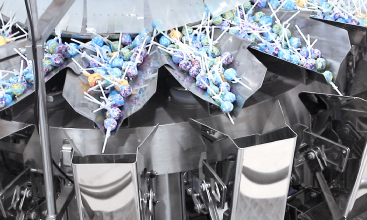
Granules — rice, sugar, plastic pellets, coffee beans — flow predictably under gravity and vibration, which makes them straightforward for standard multihead weighing. Powders are a different problem. Fine, low-density powders can bridge or clump inside hoppers, generate static charge that causes them to stick to metal surfaces, and create airborne dust that affects both weighing accuracy and workplace hygiene. Non-free-flowing powders — think starch, cocoa, or fine chemical powders — often resist the standard vibratory feed system entirely, requiring specialized hopper geometry or auxiliary feeding assistance to move consistently.
The practical result: a weigher tuned for rice will not necessarily perform well on cocoa powder, even though both fall under the broad category of "powders and granules." Matching machine configuration to the specific material — not just the product category — is what determines whether a line hits its accuracy target consistently.
Multihead Weigher or Linear Weigher for Powders? Quick Guide
Both machine types are built for granules, but they suit different production profiles. Multihead weighers handle a wider range of materials — including sticky or irregular ones — at higher speed, while linear weighers are a simpler, lower-cost option for a single, uniform, free-flowing material.
This closed-loop gravimetric control is what separates LIW feeders from volumetric systems:
| Factor | Multihead Weigher | Linear Weigher |
| Best suited for | Free-flowing granules, mixed products, and materials that are sticky, irregular, or otherwise challenging to handle, on higher-speed lines | A single, uniform, free-flowing material, on budget-conscious, lower-speed lines |
| Typical materials | Rice, sugar, coffee granules, snack mixes | Rice, sugar, salt, seeds |
| Speed profile | High — multiple heads combine simultaneously | Moderate — sequential weigh-and-fill per hopper |
| Structural complexity | Higher, more moving parts | Simpler, fewer components |
Neither machine, however, is built for a fine powder — for that, see our Loss-in-Weight Feeder Guide instead.
Both Multihead Weigher and Linear Weigher approaches solve the same underlying problem — accurate weight with minimal giveaway — through different mechanisms. For a deeper breakdown of when to choose one over the other across a wider range of products, see our complete Linear Weigher or Multihead Weigher guide. If you're comparing specific multihead models and head-count configurations, our 12 Types of Combination Scales & Multihead Weighers guide covers the full model lineup in detail.
Key Design Features for Powder and Granule Accuracy
These design features are built around granule handling — the mechanism for powder dosing works differently, as the comparison above shows. Weighing powders and granules accurately depends less on the weighing algorithm itself and more on how the machine physically handles the material before it ever reaches the scale.
Anti-clumping hopper design.
Hoppers with steeper walls and smoother internal finishes reduce material bridging, particularly important for powders prone to sticking under humidity or static charge.
Adjustable vibration intensity.
Fine powders and coarse granules need different vibration settings to flow consistently — a fixed vibration profile that works for sugar will often over-agitate a fine powder and create dust, or under-move a sticky granule and cause inconsistent feed.
Dust-proof and sealed construction.
For fine powders, dust escaping the weighing chamber isn't just a housekeeping issue — it represents lost product weight and, in food or pharmaceutical settings, a contamination and compliance risk.
Anti-static and anti-adhesion surfaces.
Plastic granules and some chemical powders generate static charge during handling, causing material to stick to chutes and hoppers instead of flowing freely. This is a common cause of weighing instability and has nothing to do with the load cell itself.
Independent hopper operation.
For products that combine multiple ingredients — spice blends, compound supplements — hoppers that can each be set to a different target weight let a multi-ingredient recipe get weighed accurately in a single pass. A five-spice blend is a good example: ingredient ratios vary widely, and a shared hopper struggles to hit each one consistently — independent hoppers match each ingredient to its own target weight instead.
Watch a Granular Powder Multihead Weigher in Operation
Here's what these design features look like in a running system:
Food-Grade Applications for Powder and Granule Weighing
In food production, powders and granules span a wide range of flow behavior — and each one tests a different part of the weighing system.
Rice, sugar, and coffee granules are relatively forgiving, free-flowing products well suited to standard high-speed multihead configurations. Seasoning blends, milk powder, and other fine powders are considerably harder: low density and a tendency to clump mean these products often require gentler vibration settings and hoppers designed to resist adhesion. Pet food and animal feed granules add another variable — inconsistent particle size within the same batch, which the weighing system needs to average out reliably to hit target weight without excessive giveaway.
Non-Food and Industrial Applications for Powder and Granule Weighing
Outside food production, powders and granules present many of the same physical challenges — with added requirements around material compatibility and regulatory compliance.
Plastic pellets and resin granules are generally free-flowing and well suited to standard multihead weighing, though color masterbatch and fine additive powders can introduce the same clumping and static issues seen in food powders. Chemical granules and powders often require food-grade-equivalent hygienic design even in non-food settings, particularly where dust containment affects worker safety. Pharmaceutical powders and granules demand tight accuracy tolerances and easy-to-clean construction to meet regulatory standards. Hardware components — screws, washers, small fasteners — aren't powders or granules in the traditional sense, but share the same core requirement: consistent counting and weighing of small, uniform items at speed.
Whether it's a food powder or an industrial granule, the rule doesn't change: configure for the material in front of you, not the label on the bag.
How to Choose the Right Machine for Your Material
Selecting between machine types and configurations comes down to a few key questions:
-
What target weight does the application require?
The target weight range directly shapes which machine specification and head-count configuration fits.
-
What production line speed is needed?
Target weight and line speed are usually the primary drivers of machine selection, before finer points like material characteristics come into play.
-
Does the material flow freely, or does it clump and bridge?
Free-flowing, uniform materials — rice, sugar, salt, seeds — suit either a linear weigher or a standard multihead configuration; granules with poor flow or sticky, irregular behavior may need a multihead unit with specialized hopper design; a fine powder generally calls for an auger filler or loss-in-weight feeder instead of either weigher type.
-
How fine is the material, and does it generate dust?
Finer powders need dust-proof construction and gentler vibration settings than coarse granules.
-
Is the product a single material or a multi-component blend?
Recipes with multiple ingredients benefit from independent hopper control to hit accurate ratios in one pass.
-
What accuracy tolerance does the application require?
High-value additives, pharmaceuticals, and precision hardware typically justify tighter tolerances than bulk commodity granules.
-
What hygiene or compliance standard applies?
Food, pharmaceutical, and some chemical applications require easy-to-clean, sealed designs to meet regulatory expectations.
Working through these questions with a supplier who actually knows your specific material is what separates a machine that performs in a demo from one that performs on your actual production floor.
Why Manufacturers Choose High Dream for Powder and Granule Weighing
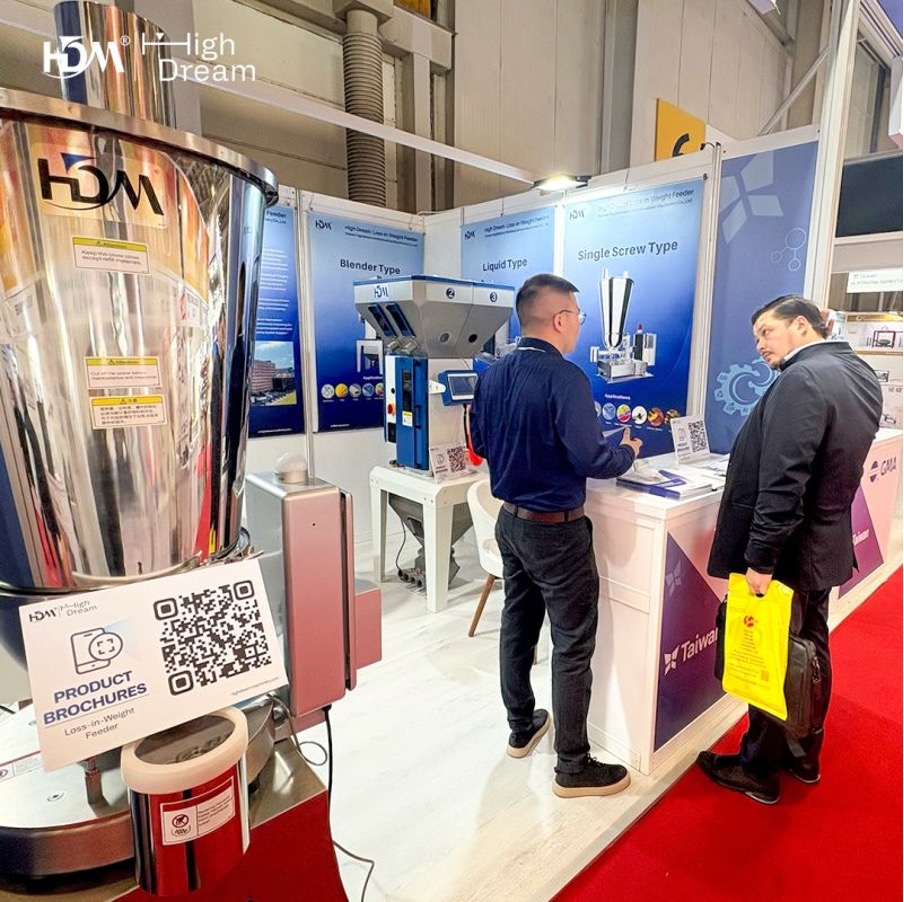
High Dream builds distinct product lines rather than one machine forced to handle every material. Multihead weighers suit high-speed lines and materials that are sticky, irregular, or otherwise difficult to handle; linear weighers suit a single, uniform, free-flowing material on budget-conscious, lower-speed lines; and fine powders are a different conversation entirely, handled instead by auger filler or loss-in-weight feeder solutions. That distinction matters more in powder and granule applications than almost anywhere else in weighing, since the same broad product category can behave in fundamentally different ways from one material to the next.
The 4.0G series covers the multihead side of that range — from the 10-head configuration suited to high-speed, free-flowing granules, to the 14-head model capable of target weights from 2g to 300g with accuracy down to 0.2g for smaller, more demanding portions.
On the other end of that range, High Dream's Linear Weigher line handles a single, uniform, free-flowing material — rice, sugar, salt, seeds — with a simpler, more economical setup than multihead, suited to customers who prioritize budget and simplicity over maximum production line speed.
Matching the right line to the right material, though, isn't something a spec sheet alone can settle. Ask High Dream's engineering team how they land on a recommendation, and it always starts with the same three questions: the material's flow characteristics, the accuracy the application requires, and the production line speed. Powder adds a layer: beyond flow rate and bulk density, the team needs to know how the material is fed — manually, through a vacuum system, or via a lifting conveyor — before specifying a setup.

Frequently Asked Questions
Q1 : Why does the same weigher perform differently on rice versus cocoa powder?
Rice flows freely under gravity and vibration, while cocoa powder is fine, low-density, and prone to clumping and static adhesion. A machine tuned for one won't necessarily hold accuracy on the other — hopper design, vibration intensity, and dust control all need to match the specific material, not just the general product category.
Q2 : Are multihead weighers suitable for non-food materials?
Yes, for granules — plastic pellets and chemical granules are commonly weighed on multihead systems, though non-food applications often still require food-grade-equivalent hygienic design for dust control and cleaning. Multihead weighers are generally not recommended for powders; for those, an auger filler or loss-in-weight feeder is the better fit.
Q3 : How can a multi-ingredient recipe — a spice blend or compound supplement — be weighed accurately in one pass?
A multihead weigher with independently configurable hoppers can set a different target weight for each ingredient, so a granular blend gets weighed accurately without separate steps. If the recipe itself is a fine powder, an auger filler or loss-in-weight feeder is still the better fit.
Q4 : What causes inconsistent weighing accuracy with granular powders?
The most common causes are material clumping or bridging in the hopper, static charge causing adhesion to metal surfaces, and vibration settings mismatched to the specific powder's flow characteristics — rather than a fault in the weighing sensor itself.
Q5 : What's the difference between a multihead weigher and a linear weigher?
A multihead weigher combines multiple simultaneous weighments to hit target weight at high speed, and can handle a wider range of materials, including sticky or irregular ones. A linear weigher weighs sequentially through fewer hoppers — a simpler, lower-cost option, but really only for a single, uniform, free-flowing material, and typically at a lower throughput. For fine powders, neither is the right fit; an auger filler or loss-in-weight feeder is generally the better solution.
Talk to a Powder and Granule Weighing Specialist
Choosing the right weighing configuration for your specific material — not just your product category — is what determines whether your line hits target accuracy consistently. High Dream's engineering team can help you evaluate your material's flow characteristics and recommend the right multihead or linear configuration for your production line.
Contact High Dream to discuss your application and request a tailored recommendation.