



Multihead Weighers for Hardware and Non-Food Products: Applications, Challenges, and Machine Selection
Explore multihead weighers for hardware and non-food products, including weighing vs. counting, handling challenges and key machine selection factors.
Multihead weighers are widely associated with food packaging, but their applications extend beyond snacks and produce. They also support non-food packaging automation, handling products ranging from dense metal parts to lightweight plastic components.
For manufacturers packaging products by weight, automatic combination weighing can improve portioning consistency and reduce repetitive manual handling. This guide explains common applications, weighing versus counting, material-handling challenges and key machine selection factors.
Which Hardware and Non-Food Products Can Be Weighed?
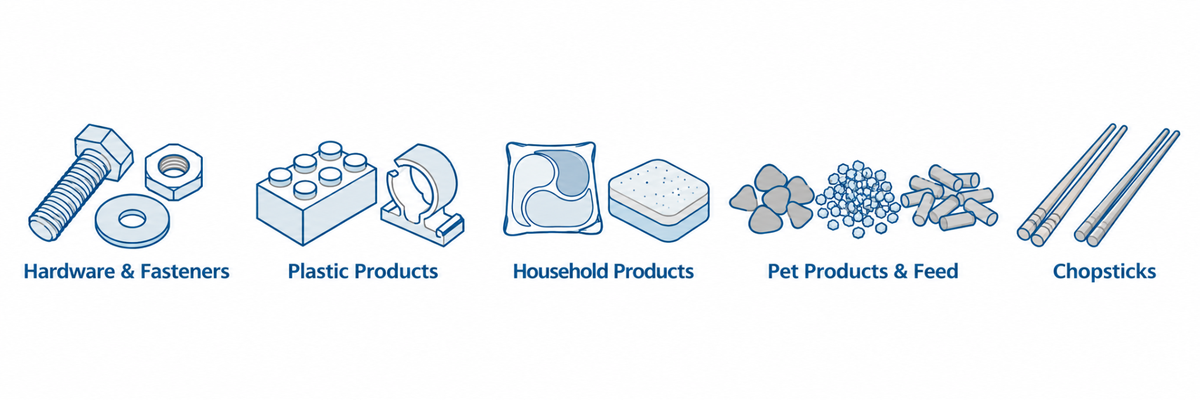
Multihead weighers can handle a wide range of hardware and other non-food products. Highdream has practical experience weighing the following:
- Hardware and fasteners: Screws, nails, bolts, washers and other small hardware components.
- Plastic products: Plastic toys, molded parts and lightweight components.
- Household products: Laundry detergent pods and dishwashing tablets.
- Pet products and animal feed: Pet food kibble, cat litter and specialty feeds.
- Long, slender products: Wooden or bamboo chopsticks.
These products do not necessarily suit the same configuration. Dense metal fasteners may require different contact surfaces, hopper dimensions and discharge arrangements from bulky plastic toys or delicate detergent pods. Suitability should be assessed against actual product characteristics and packaging requirements.
Packaging by Weight vs. by Count: What Is the Difference?
Hardware and plastic parts may be packaged according to a target weight or a specified number of pieces. A bag containing 100 g of screws has a different control objective from one containing exactly 10 screws.
| Comparison Item | Optical/Sensor Counter | Multihead Weigher |
| Control objective | Number of pieces per package | Weight per package |
| Typical requirement | 10 fasteners | 100 g of fasteners |
| Operating principle | Detects and counts individual parts | Combines portions from multiple weigh hoppers to approach the target weight |
| Throughput factors | Part separation, detection capacity and pieces per pack | Feeding consistency, target weight and weighing and discharge cycles |
For standardized parts with highly consistent individual weights, weight-based portioning can also achieve an approximate piece count. It may offer higher throughput than systems requiring individual part separation and counting, particularly for larger quantities per pack.
However, this does not make weight-based portioning a guaranteed counting method. Suitability must be verified through product testing, as individual weight variations can affect the final quantity.
Operational Challenges in Hardware and Non-Food Weighing
Impact and Wear
Screws, nuts, bolts and washers can strike feeder pans, hoppers and discharge chutes with considerable force. Threads and sharp edges may accelerate wear.
Suitable contact-part construction, wear-resistant liners and controlled drop heights can help. Thicker stainless steel or protective cushioning may be appropriate, depending on the application.
Jamming and Entanglement
Long screws, springs and hooked fasteners may overlap or interlock. Springs can become tangled, while long screws may bridge narrow openings and prevent complete discharge.
Feeder width, hopper geometry, door openings and discharge clearances should be assessed together against the product’s dimensions and shape.
Piece-to-Piece Weight and Size Variation
Cast metal fittings, injection-molded toy components and plastic fasteners can vary in weight and dimensions. These differences affect portion distribution and the combinations available to approach the target weight.
At the same target package weight, relatively heavy bolts provide fewer opportunities for fine adjustment than small washers. Testing helps establish achievable tolerances.
Lightweight and Slender Products
Hollow plastic toys, caps and clips may occupy considerable space despite their low weight. Static electricity may also cause lightweight parts to cling to contact surfaces.
Chopsticks present a different challenge: their length and orientation may cause them to bridge feeder channels or hopper openings. Appropriate dimensions, feeding control and product guidance help maintain smooth transfer.
Key Factors to Consider When Selecting a Multihead Weigher for Non-Food Products
Discuss the following requirements with your equipment supplier:
- Target package weight and tolerance: Define the required weight and acceptable variation. Clarify whether the customer requires weight-based packaging or an exact piece count.
- Individual weight, dimensions and bulk density: Provide representative measurements and variations. Lightweight, bulky products may require substantial hopper capacity despite a low package weight.
- Speed and packaging format: Specify the required packs per minute alongside the target weight. Bags, boxes and containers may need different discharge interfaces.
- Product protection: Evaluate impact, wear, fragility and drop height. Metal components and delicate detergent pods require different handling considerations.
- Downstream integration: Confirm installation dimensions, compatible control signals and discharge timing with vertical form-fill-seal (VFFS) machines, cartoners or container-filling equipment.
Maximizing Efficiency with the Right Weighing Solution
Successful non-food weighing starts with matching equipment to the product. Stable feeding, suitable hopper geometry and controlled discharge are as important as the weighing system itself.
Highdream has practical experience handling hardware, plastic toys, laundry detergent pods, feed and chopsticks. Share your product photographs, dimensions, individual weight, target package weight and required output to discuss a suitable configuration.
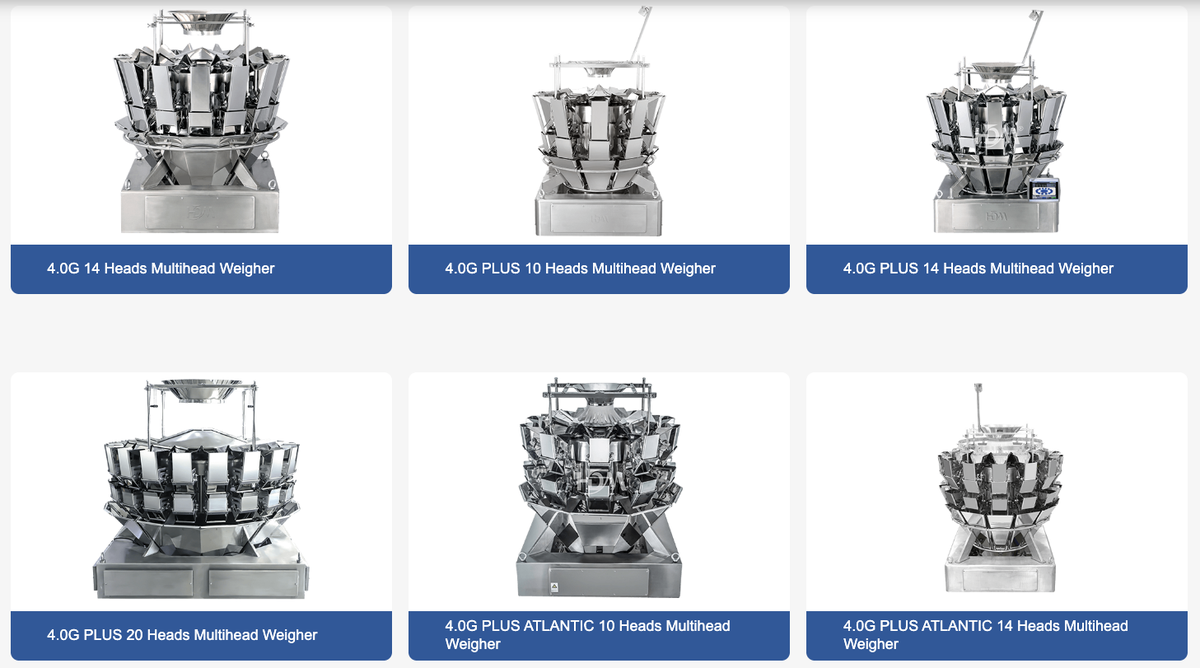
Explore the Highdream Multihead Weigher Series to compare available models and discuss your application.
Frequently Asked Questions
Can a multihead weigher weigh screws, nuts and bolts?
Yes. Multihead weighers can automatically portion screws, nuts, bolts and other hardware components to a target package weight. Highdream has practical experience weighing hardware products and can assess a suitable configuration for your application.
Can the same machine handle both metal and plastic parts?
Yes, provided the machine’s configuration accommodates both products. Metal parts and lightweight plastic components can differ considerably in density, volume, flow behaviour and impact requirements. Recipe changes may be sufficient for compatible products, while others may require different contact parts or handling arrangements. Testing representative products before purchase helps confirm whether one machine can meet both requirements.
Does a target package weight guarantee an exact number of pieces?
No. A weight-based multihead weigher controls package weight rather than directly counting individual pieces. For standardized parts with highly consistent individual weights, this can be a practical way to achieve an approximate quantity and may support higher throughput for larger batches. However, piece-weight variation and weighing tolerances can still affect the final count.
What affects weighing accuracy and speed for small parts?
Primarily individual weight variation, feeding consistency and reliable discharge. Machine configuration and installation conditions also matter.
What product information is needed before selecting a machine?
Provide product photographs or videos, dimensions, representative individual weights, weight variation and bulk density where available. Also specify the target package weight, acceptable weight tolerance, required packs per minute and packaging format. This information helps Highdream assess the configuration and integration requirements.