



Gravimetric Dosing System: How It Works, Where It's Used, and How to Choose the Right One
Every gram of overdosed material adds up. Across a month of high-speed, continuous production, even a fractional deviation in feed rate can translate into a measurable loss in raw material cost — long before anyone notices it on the balance sheet. For manufacturers running powder, granule, or liquid dosing at scale, the difference between "close enough" and "accurate" is rarely cosmetic; it's a direct line to margin.
This is the problem a gravimetric dosing system is built to solve. This guide walks through exactly that: how the technology works, where it's used across industries, and how to choose the right system for your process.
What Is a Gravimetric Dosing System?
A gravimetric dosing system doses material by continuously measuring its actual weight, rather than estimating volume. At the core of the system is a load cell that tracks the weight of material inside a hopper in real time. As material is dispensed — typically through a screw, twin-screw, vibratory, or belt mechanism — the controller calculates the rate of weight loss per unit of time. This is the "loss-in-weight" principle that gives the technology its name.
The system compares that actual feed rate against the target set point and adjusts motor speed through a closed-loop PID controller, correcting deviations continuously rather than periodically. Because the measurement is based on mass — not volume — the result stays accurate regardless of changes in material density, particle size, or moisture content, all of which can throw off a volumetric system without warning.
In practice, this closed-loop weighing cycle repeats many times per second, which is what allows gravimetric systems to hold tight tolerances even when material characteristics shift mid-run — a common scenario in recycled resin, hygroscopic powders, or blended additive streams.
For a deeper look at how this loss-in-weight principle works mechanically — including feeder types, PID control logic, and supplier selection criteria — see our Loss-in-Weight Feeder Guide.
Gravimetric vs. Volumetric Dosing: Quick Comparison
Before choosing between the two approaches, it helps to see them side by side at a glance.
| Factor | Gravimetric Dosing | Volumetric Dosing |
| Measurement basis | Actual weight (load cell) | Fixed volume (screw/chamber rotation) |
| Accuracy under density variation | Self-correcting | Requires manual recalibration |
| Calibration frequency | Lower — self-adjusting | Higher — needed with each material change |
| Typical use case | High-precision, high-value additive dosing | Lower-cost, less density-sensitive applications |
Both technologies have a place in modern production — the right choice depends on your material characteristics, accuracy requirements, and budget. For a full breakdown of feeder types, application scenarios, and selection criteria, see our complete Gravimetric Feeder vs. Volumetric Feeder guide.
Gravimetric Dosing System Applications Across Industries
Gravimetric dosing isn't a single-industry technology — the core principle applies wherever consistent, weight-based accuracy affects product quality or cost.
Modified Plastics & Compounding
In twin-screw extrusion for PP and PE compounding, gravimetric feeders maintain consistent additive-to-resin ratios even as bulk density shifts between virgin material and regrind. This directly affects color consistency, mechanical properties, and masterbatch usage.
Food Processing
For ingredients with low, variable density — flour, starch, seasoning blends — gravimetric feeding prevents the batch-to-batch inconsistency that volumetric systems struggle with. High Dream's feeding systems have been applied to continuous, quantified batching in snack and baked-goods production lines, where buffer capacity and consistent material supply are critical to avoiding overflow or shortfall during frying or mixing stages.
Chemical Processing
Chemical plants typically require larger feed volumes and, in many cases, explosion-proof design. Gravimetric systems here often include wear-resistant lining and sealed housings to handle corrosive or hazardous bulk materials safely while maintaining dosing accuracy.
Lithium Battery Cell Production
Precision electrode material dosing is critical to battery consistency and safety. Gravimetric feeding systems support the tight tolerances required for premix and electrode paste production, operating within fully sealed environments to minimize material loss and contamination risk.
How to Choose a Gravimetric Dosing System
Selecting the right system comes down to matching equipment capability to your material and process requirements. Key factors to evaluate:
Feed rate range
Confirm the system's minimum and maximum throughput cover your actual production range, not just your average — undersized or oversized capacity both hurt accuracy at the margins.
Material characteristics
Free-flowing powders, cohesive powders, flakes, liquids, and fragile granules each favor different feeding mechanisms — screw, twin-screw, vibratory, or belt-driven.
Required accuracy
High-value additives and colorants typically justify tighter tolerance specifications than bulk fillers, where cost sensitivity may allow a wider dosing window.
Environmental and safety requirements
Explosion-proof housing, wear-resistant linings, and sealed designs matter in chemical and battery-material applications where dust control or hazardous material handling is a factor.
Cleaning and changeover needs
For multi-product lines, a feeder with a quick-disassembly screw or hopper design significantly reduces changeover downtime between material runs.
Working through these factors with an experienced supplier — rather than selecting on cost or speed alone — is what determines whether a dosing system performs consistently once it's running your actual production, not just your test batch.
How Gravimetric Accuracy Reduces Material Costs
The cost logic behind gravimetric dosing is straightforward: the tighter your feed accuracy, the less material margin you need to build in as a safety buffer. Volumetric systems, which can't self-correct for density fluctuation, are often deliberately set to slightly overdose as insurance against inconsistency — and that overdosing compounds across every batch, every shift, every month.
A gravimetric system's continuous, self-adjusting weight measurement removes much of that need for a safety margin. Because the system corrects for density and flow variation in real time, operators can run closer to the actual target dosage with confidence, rather than padding it to avoid underdosing. Over high-volume, continuous production, that tighter margin — particularly on expensive additives, colorants, or active ingredients — is where the accuracy of the equipment translates directly into material cost savings.
The same underlying principle — that weight accuracy protects margin — shows up downstream of dosing as well. Our Checkweighing Guide covers how giveaway is controlled at the finished-product stage, for manufacturers looking to close the loop from precise dosing through to final weight verification.
Maintenance and Calibration Best Practices
Gravimetric systems require less frequent recalibration than volumetric systems, since the closed-loop weighing process continuously self-corrects. Still, a few practices keep long-term accuracy stable:
- Periodic load cell verification against a certified reference weight, on a schedule appropriate to your production intensity.
- Routine cleaning, especially for sticky, dusty, or moisture-sensitive materials — feeders designed for tool-free screw disassembly make this significantly faster.
- Inspection of wear components such as screws and liners in abrasive-material applications, where gradual wear can subtly affect feed consistency before it becomes visible in output quality.
- Environmental control checks for vibration or airflow disturbances near the load cell, which can introduce measurement noise even in an otherwise well-calibrated system.
A feeder that's easy to clean and inspect isn't just a convenience feature — it directly protects the accuracy the system was purchased for in the first place.
Why Manufacturers Choose High Dream for Gravimetric Dosing
With nearly 18 years of experience designing and manufacturing weighing equipment, High Dream builds gravimetric dosing systems across twin-screw, single-screw, vibratory, liquid, and belt-driven configurations — covering feed rates from micro-flow applications up to large-volume, high-throughput lines.
Systems are engineered for the realities of continuous production — supporting both continuous and batch feeding modes, with options including anti-bridging devices, explosion-proof housings, and wear-resistant linings for demanding chemical and industrial environments.
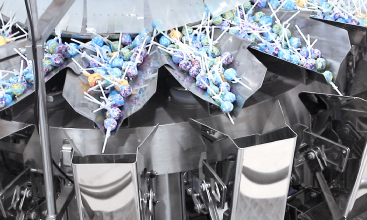
This expertise sits within High Dream's broader gravimetric weighing capability, which also includes multihead weighers for batch and packaging applications — giving the company engineering depth across both continuous and discrete weight-based dosing technologies.
Frequently Asked Questions
Q1 : What is the difference between a gravimetric dosing system and a loss-in-weight feeder?
A loss-in-weight feeder is a specific type of gravimetric dosing system — the terms are closely related, with "loss-in-weight" describing the exact measurement method (tracking weight reduction over time) that gravimetric systems use.
Q2 : How often should a gravimetric dosing system be calibrated?
Less frequently than volumetric systems, since the closed-loop design self-corrects continuously. Periodic verification against a certified reference weight is still recommended, with frequency depending on production intensity and material characteristics.
Q3 : Can a gravimetric dosing system handle both powders and liquids?
Yes. Depending on the feeder configuration — screw, twin-screw, vibratory, or liquid-specific models — gravimetric systems can accurately dose free-flowing powders, cohesive powders, fibrous materials, and liquids.
Q4 : Is gravimetric dosing worth the investment over volumetric systems?
For applications involving expensive additives, strict quality tolerances, or materials with variable density, the accuracy and reduced safety-margin overdosing typically justify the higher upfront cost. For lower-value bulk materials with stable density, volumetric dosing may remain a more cost-effective choice.
Q5 : What industries commonly use gravimetric dosing systems?
Food processing, modified plastics and compounding, chemical manufacturing, pharmaceuticals, and battery material production are among the most common applications, wherever consistent weight-based accuracy affects product quality or material cost.
Talk to a Gravimetric Dosing Specialist
Choosing the right gravimetric dosing system depends on your specific material, throughput, and process requirements — and getting that match right from the start avoids costly rework later. High Dream's engineering team can help you evaluate your production line and recommend a configuration built for your actual operating conditions.
Contact High Dream to discuss your application and request a tailored recommendation.